
 +91-22-48913909
Understand the Pros and Cons of Renting or Buying a House!
Making the decision to rent or buy a house is a big one that affects not just your lifestyle but also your financial well-being. Owning a piece of Real Estate is advertised as a way to create equity and take advantage of tax savings.
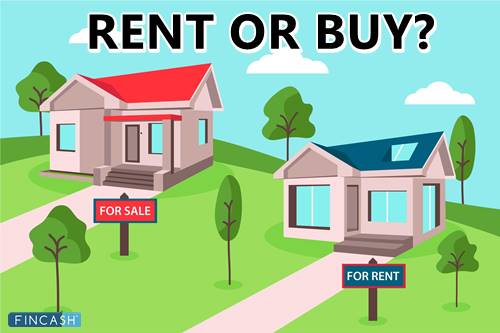
Additionally, renting can be advantageous due to the lack of obligation and freedom. Renting is seen by many as the more financially sound option. Mortgage lenders, real estate brokers, and home improvement companies - all make a lot of money from real estate.
As a result, it has become an integral element of our cultural thinking and economic system. Owning a property, on the other hand, is not necessarily better than renting, and renting is not as simple as it appears to be.
Consider the advantages and disadvantages of renting versus owning to determine which is best for you.
Why is Buying Better than Renting?
Buying and owning a house is in many ways better than renting it. Here are the key benefits associated with owning a home:
- It gives a sense of security and ownership pride.
- You pay rent every month, but you have no physical assets to show for your money. On the contrary, paying an EMI has two advantages: it not only gives a month's worth of shelter, but it also raises the proportional ownership of a home.
- When you rent, you're often forced to move, which wastes a lot of time, money, and energy, but when you own, you don't have to move.
- It is a safe bet that is backed by an actual asset and offers the potential for capital appreciation and tax benefits.
Pros of Renting
There are various benefits of renting a house, like the ones mentioned below:
Renting has the advantage of not having to worry about EMI payments, house taxes, and other legal concerns that come with property ownership.
It has a tendency to make people feel less responsible. A house worth
Rs. 50 lakhscan be rented for as little asRs. 10,000-15,000 per monthin metropolises. You'll have to pay anywhere fromRs. 35,000 to Rs. 40,000 in EMIswhen you buy the identical home (equated monthly instalment).Renting closer to work or good schools may be more convenient, but buying the same houses may or may not be inexpensive.
Talk to our investment specialist
EMI vs Rent
Assume there is a real estate property, and you want to decide buying vs renting a house in Mumbai. According to the current market value, it is worth approximately Rs. 50 lakhs. When deciding whether to buy or rent a house, let's see what happens.
Rental Cost
If a person selects to rent this property, the monthly fee will be approximately Rs.15,000. Every 11 months, the fee will climb.
Buying Costs
It costs Rs.35,000 every month (@8.6% for 20 years) if you take out a Home Loan (20% down payment, 80% loan). Rent is almost 2.33 times more expensive than paying an EMI (per month). There would also be a down payment of Rs. 10 lakhs (self-contribution).
For a middle-class person, EMI payments can be a big strain. Because of this, purchasing real estate can be a difficult decision.
Simple Ways to Choose Between Renting & Buying a House
1. How long you want to stay in the same place?
Also, do you plan on settling down in your community, or do you want greater freedom to move around as you please?
It makes sense to buy a property if you're positive you'll stay there for at least five years. Why? Because you can personalize your home and make it feel like yours.
For those who like to be more mobile, though, renting is the best choice. What if you truly want that job promotion, but it's halfway across the country away from you? During a job transfer, you don't want to have to deal with the headache of selling your property. Some people migrate to new areas and take some time getting acquainted with the local communities before settling down.
While it's possible to buy a home and then sell it within a few years, it doesn't make sense. If you are selling a home, you may incur additional closing expenses in addition to the initial closing and relocation costs.
2. How much does it cost to rent versus buy?
Because of the upfront fees, renting is often less expensive than buying a home. A down payment, closing costs, and relocation expenses are all included.
If you can afford your mortgage payment, you can afford a property, but the costs pile up. Additionally, you'll have to pay for property taxes, homeowners’ insurance, and (in many situations) mortgage insurance in addition to homeowners’ association fees.
However, owning a home can save you money in the long term and allow you to develop equity. Not only that, but becoming a homeowner saves money on taxes (though with the recent tax changes, there may be limits as to how much mortgage interest, state and local property taxes you can write off).
You can rent for a few years, save your money, and then buy a home if you're keen on owning a residence. If you want to stay in your house for the long term, your savings may not include maintenance fees. For those who have paid off their mortgage and continue to live in the home, even with home upkeep fees, the savings can be substantial.
3. Is it more important for you to be mobile or to have a permanent home?
Life happens, as corny as it may sound. It's difficult to foresee what will happen next, even with the greatest of intentions. Owning a home may make the most sense if you want to stay in one place for a long time and have the financial resources to do so.
However, it's critical to assess your current life position and consider whether or not it will alter in the next few years. So, if it does, your residential requirements may alter as well (i.e., you may want to hold off on buying a home).
Example: You've just become engaged to your long-time lover and plan to get married in the next two years. However, buying may not be a good idea here. Before buying a property, you and your partner may want to figure out how to merge your finances and establish a budgeting regimen.
If you and your spouse just got married and aren't sure if you want to start a family just yet, you may want to consider the following. If you're thinking about starting a family, don't buy a house that won't be able to handle a growing family in a few years.
You might choose to rent in either of these situations until you figure out what you want in a home, how much you can afford, and what kind of house is the greatest fit for your future lifestyle.
4. Think about the risks of renting and buying before you commit
You can develop equity by purchasing a home, but there are some financial hazards involved in the process. For starters, if your local real estate market slumps, you could lose money. Your closing fees and renovations may not be recouped if your house is sold sooner than you had hoped.
Also, do not forget about the cost of maintenance. All of these expenses are necessary to keep your property in top shape. As an example, think about cleaning air filters and vents and testing fire alarms, as well as gardening and repairing plumbing concerns.
If you have other priorities in life, such as work that demands frequent travel or a large family, adding home upkeep to your list of duties may not be the greatest choice.
If you rent, you'll miss out on the potential to develop equity. It is possible for your rent to increase at any time. In addition, your landlord can order you to leave or put off maintenance requirements.
5. Take a look at your current financial situation
When deciding between renting and owning, it's crucial to be realistic about your financial condition. Consider whether you can afford extra upfront expenses, such as a down payment, repairs, and moving charges, as well as purchasing new furnishings after you have calculated the costs of renting versus purchasing. A mortgage calculator will help you figure out how much you can afford to pay each month.
Prepare your finances now so that you can afford a home or a place to rent no matter what you decide.
Do you Prefer Buying a Home?
It is important to own a home for three main reasons:
It forces savings
Homebuyers are often forced to save for a downpayment. The result of this is that anyone planning on purchasing real estate will save more to cover the down payment.
Help analyze affordability
Find out what you can afford and what you can't—buying a home at a young age can teach you how to do this. How? The purchase of real estate is a fantastic idea. However, one should avoid buying an extremely pricey residence. How does one know if they can afford a purchase? Let's say your monthly payment is INR 1.5 lakhs (approx. By paying Rs. 35,000 each month as an EMI, you are only allocating 23.5% of the income to EMI. A good rule of thumb is to keep the EMI or Income ratio under 30%.
Provide savings for the future
When you buy a home, you open up a new set of money-saving opportunities. What is it, exactly? One's home loan might be paid off early, allowing one to save money. For example, buying a house and paying off a loan early (say 5 years early) can save you several thousand.
SIP - Best Way to Buy your Dream Home!
The best way to accomplish your dream home is by Investing in SIP (Systematic Investment plan). With the help of a sip calculator, you can get a precise figure for your dream home from which you can invest a fixed amount in SIP.
SIP is only the easiest and hassle-free way to achieve your Financial goals. Try now!
Speed-up your Savings to Buy Dream House
If you are planning to fulfil a certain goal, then a SIP calculator will help you to calculate the amount you need to invest.
SIP calculator is a tool for investors to determine the expected return of the SIP investment. With the help of a SIP calculator, one can calculate the amount of investment and time period of investing requires to reach one's financial goal.
Know Your SIP Returns
Fund Selection Methodology used to find 10 funds
Best SIPs to Invest 2026
Fund NAV Net Assets (Cr) Min SIP Investment 3 MO (%) 6 MO (%) 1 YR (%) 3 YR (%) 5 YR (%) 2024 (%) DSP World Gold Fund Growth ₹58.7417
↓ -0.07 ₹1,828 500 18.7 6.9 32.2 56.6 30.1 167.1 SBI Gold Fund Growth ₹42.8684
↑ 0.40 ₹17,647 500 4.9 0.2 26.5 35 24.9 71.5 Invesco India Gold Fund Growth ₹41.3227
↑ 0.50 ₹511 500 5.6 1.5 27.6 34.5 24.7 69.6 IDBI Gold Fund Growth ₹37.8169
↑ 0.17 ₹858 500 4.5 1.1 25.9 34.5 24.7 79 ICICI Prudential Regular Gold Savings Fund Growth ₹45.2658
↑ 0.40 ₹7,149 100 4.8 0.3 26 34.9 24.7 72 HDFC Gold Fund Growth ₹43.6658
↑ 0.34 ₹12,359 300 4.9 0.5 26.1 34.7 24.7 71.3 Nippon India Gold Savings Fund Growth ₹55.8998
↑ 0.44 ₹7,602 100 4.8 0.2 26.4 34.6 24.6 71.2 Aditya Birla Sun Life Gold Fund Growth ₹42.5085
↑ 0.32 ₹1,843 100 4.8 0.7 26.3 34.6 24.6 72 Axis Gold Fund Growth ₹42.4558
↑ 0.38 ₹3,191 1,000 4.8 0.5 26 34.4 24.6 69.8 Kotak Gold Fund Growth ₹56.1912
↑ 0.50 ₹7,195 1,000 4.9 0.5 27.1 34.8 24.3 70.4 Note: Returns up to 1 year are on absolute basis & more than 1 year are on CAGR basis. as on 29 Sep 26 Research Highlights & Commentary of 10 Funds showcased
Commentary DSP World Gold Fund SBI Gold Fund Invesco India Gold Fund IDBI Gold Fund ICICI Prudential Regular Gold Savings Fund HDFC Gold Fund Nippon India Gold Savings Fund Aditya Birla Sun Life Gold Fund Axis Gold Fund Kotak Gold Fund Point 1 Bottom quartile AUM (₹1,828 Cr). Highest AUM (₹17,647 Cr). Bottom quartile AUM (₹511 Cr). Bottom quartile AUM (₹858 Cr). Upper mid AUM (₹7,149 Cr). Top quartile AUM (₹12,359 Cr). Upper mid AUM (₹7,602 Cr). Lower mid AUM (₹1,843 Cr). Lower mid AUM (₹3,191 Cr). Upper mid AUM (₹7,195 Cr). Point 2 Oldest track record among peers (19 yrs). Established history (15+ yrs). Established history (14+ yrs). Established history (14+ yrs). Established history (14+ yrs). Established history (14+ yrs). Established history (15+ yrs). Established history (14+ yrs). Established history (14+ yrs). Established history (15+ yrs). Point 3 Top rated. Rating: 2★ (upper mid). Rating: 3★ (top quartile). Not Rated. Rating: 1★ (lower mid). Rating: 1★ (lower mid). Rating: 2★ (upper mid). Rating: 3★ (upper mid). Rating: 1★ (bottom quartile). Rating: 1★ (bottom quartile). Point 4 Risk profile: High. Risk profile: Moderately High. Risk profile: Moderately High. Risk profile: Moderately High. Risk profile: Moderately High. Risk profile: Moderately High. Risk profile: Moderately High. Risk profile: Moderately High. Risk profile: Moderately High. Risk profile: Moderately High. Point 5 5Y return: 30.10% (top quartile). 5Y return: 24.85% (top quartile). 5Y return: 24.73% (upper mid). 5Y return: 24.72% (upper mid). 5Y return: 24.69% (upper mid). 5Y return: 24.68% (lower mid). 5Y return: 24.62% (lower mid). 5Y return: 24.62% (bottom quartile). 5Y return: 24.60% (bottom quartile). 5Y return: 24.35% (bottom quartile). Point 6 3Y return: 56.58% (top quartile). 3Y return: 35.01% (top quartile). 3Y return: 34.54% (bottom quartile). 3Y return: 34.51% (bottom quartile). 3Y return: 34.92% (upper mid). 3Y return: 34.71% (upper mid). 3Y return: 34.64% (lower mid). 3Y return: 34.65% (lower mid). 3Y return: 34.40% (bottom quartile). 3Y return: 34.80% (upper mid). Point 7 1Y return: 32.18% (top quartile). 1Y return: 26.45% (upper mid). 1Y return: 27.59% (top quartile). 1Y return: 25.88% (bottom quartile). 1Y return: 25.96% (bottom quartile). 1Y return: 26.08% (lower mid). 1Y return: 26.41% (upper mid). 1Y return: 26.28% (lower mid). 1Y return: 26.02% (bottom quartile). 1Y return: 27.10% (upper mid). Point 8 Alpha: 4.18 (top quartile). 1M return: -4.48% (upper mid). 1M return: -3.62% (top quartile). 1M return: -4.77% (bottom quartile). 1M return: -4.33% (upper mid). 1M return: -4.64% (lower mid). 1M return: -4.52% (upper mid). 1M return: -4.72% (bottom quartile). 1M return: -4.19% (top quartile). 1M return: -4.53% (lower mid). Point 9 Sharpe: 1.25 (bottom quartile). Alpha: 0.00 (top quartile). Alpha: 0.00 (upper mid). Alpha: 0.00 (upper mid). Alpha: 0.00 (upper mid). Alpha: 0.00 (lower mid). Alpha: 0.00 (lower mid). Alpha: 0.00 (bottom quartile). Alpha: 0.00 (bottom quartile). Alpha: 0.00 (bottom quartile). Point 10 Information ratio: -1.01 (bottom quartile). Sharpe: 1.38 (upper mid). Sharpe: 1.38 (upper mid). Sharpe: 1.32 (lower mid). Sharpe: 1.30 (lower mid). Sharpe: 1.38 (upper mid). Sharpe: 1.27 (bottom quartile). Sharpe: 1.28 (bottom quartile). Sharpe: 1.42 (top quartile). Sharpe: 1.46 (top quartile). DSP World Gold Fund
SBI Gold Fund
Invesco India Gold Fund
IDBI Gold Fund
ICICI Prudential Regular Gold Savings Fund
HDFC Gold Fund
Nippon India Gold Savings Fund
Aditya Birla Sun Life Gold Fund
Axis Gold Fund
Kotak Gold Fund
CAGR returns for over 5 years and fund having atleast have market history (Fund age) of 5 year and have minimum 500 Crore of asset under management.
Conclusion
If you're wondering whether to rent or buy, the answer isn't always clear-cut. The answer may alter over time, depending on your life status and resources. Another alternative is to rent-to-own a property and then buy it. Your financial condition and lifestyle should be taken into consideration while making any decisions.
All efforts have been made to ensure the information provided here is accurate. However, no guarantees are made regarding correctness of data. Please verify with scheme information document before making any investment.








AMFI Registration No. 112358 | CIN: U74999MH2016PTC282153
Shepard Technologies Pvt. Ltd. (with ARN code 112358) makes no warranties or representations, express or implied, on products offered through the platform. It accepts no liability for any damages or losses, however caused, in connection with the use of, or on the reliance of its product or related services. Terms and conditions of the website are applicable.
©2026 Shepard Technologies Private Limited. All Rights Reserved