
 +91-22-48913909
Best Liquid Mutual Funds in 2026 - A Complete Investor Guide
Every investor has “temporary money” — money waiting to be invested, spent, or moved.
Bonuses, business inflows, sale proceeds, emergency buffers — these amounts often sit in savings accounts simply because it feels convenient. But convenience comes at a cost.
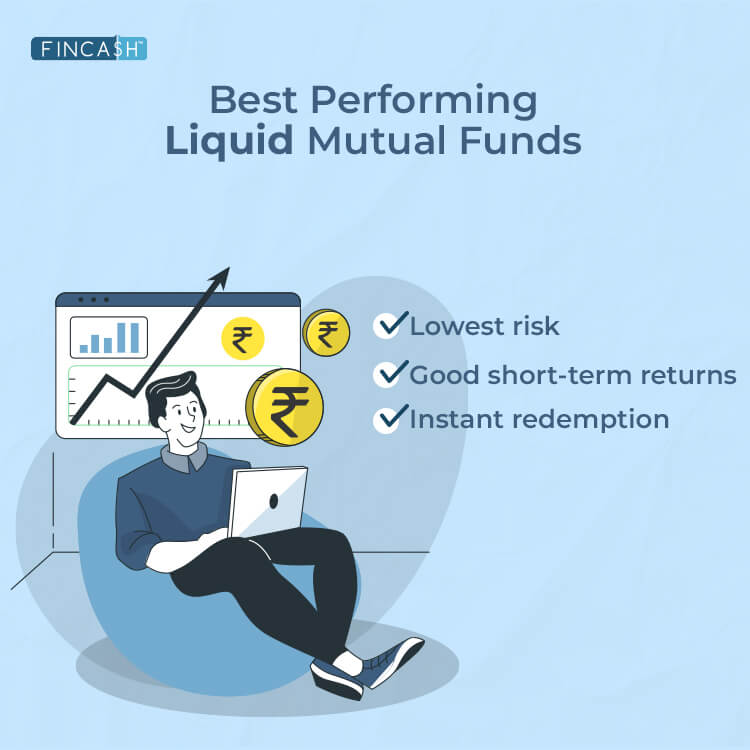
Liquid Mutual Funds exist for exactly this situation. They are designed to handle money that is not meant to stay idle, yet should not be exposed to market Volatility.
In this article, we break down liquid mutual funds in a practical, investor-first manner — how they work, why experienced investors use them, and how you can use them effectively as part of a disciplined Financial plan.
What are Liquid Funds?
Liquid mutual funds are a category of debt mutual funds that invest in very short-term money market instruments such as:
- Treasury Bills (T-Bills)
- Certificates of Deposit (CDs)
- Commercial Papers (CPs)
- Short-term government securities
The defining feature of Liquid Funds is that the maturity of each instrument does not exceed 91 days. Because of this ultra-short maturity, liquid funds carry low interest-rate risk and relatively low credit risk compared to other debt funds.
In simple terms, liquid funds are designed to park money safely for a few days to a few months, while earning returns that are typically higher than a savings Bank account.
How Do Liquid Funds Work?
When you invest in a liquid fund, your money is pooled with other investors’ money and invested in short-term debt instruments issued by governments, banks, and high-quality corporates.
Because these instruments mature quickly -
- The fund manager can easily meet redemption requests
- NAV fluctuations remain minimal
- The fund continuously reinvests matured instruments at prevailing market rates
This makes liquid funds highly suitable for managing temporary surplus cash.
Talk to our investment specialist
Why Invest in Liquid Funds?
Liquid funds are not return-maximising products. They are efficiency products—designed to optimise idle money.
Key Benefits -
- No lock-in period - You can withdraw money anytime
- High liquidity - Most liquid funds offer T+1 redemption
- Low risk - Minimal volatility due to short maturity
- Better than idle cash - Typically earn more than savings accounts
- Ideal for short duration - From 1 day to a few months
Liquid funds are often used as a temporary parking solution, not a long-term investment.
Liquid Funds vs Savings Bank Account
Savings accounts are familiar and perceived as safe, but they are not efficient for surplus cash.
| Feature | Savings Account | Liquid Mutual Fund |
|---|---|---|
| Returns | Low | Relatively higher |
| Liquidity | Instant | T+1 redemption |
| Risk | Nil | Low |
| Flexibility | Limited | High |
While savings accounts offer convenience, liquid funds are often preferred when money is not required immediately and can be parked even for a short period.
Example: If you receive a bonus, business inflow, or sale proceeds and do not need the money immediately, a liquid fund allows your money to work instead of remaining idle.
Who Should Invest in Liquid Funds?
Liquid funds are suitable for:
- Salaried individuals waiting to deploy money into SIPs
- Business owners managing working capital
- Investors waiting for market opportunities
- Individuals parking emergency funds temporarily
- Corporates managing short-term cash flows
They are not meant for long-term wealth creation, but for capital preservation with efficiency.
Fund Selection Methodology used to find 6 funds
6 Best Liquid Funds India FY 26 - 27
Fund NAV Net Assets (Cr) 1 MO (%) 3 MO (%) 6 MO (%) 1 YR (%) 2025 (%) Debt Yield (YTM) Mod. Duration Eff. Maturity Axis Liquid Fund Growth ₹3,170
↑ 0.32 ₹60,548 0.6 1.5 3.3 6.5 6.6 7.15% 1M 2D 1M 2D Edelweiss Liquid Fund Growth ₹3,640.49
↑ 0.34 ₹16,681 0.6 1.5 3.3 6.5 6.5 6.52% 2M 1D 2M 1D UTI Liquid Cash Plan Growth ₹466.919
↑ 0.09 ₹33,583 0.6 1.5 3.3 6.5 6.5 6.39% 1M 19D 1M 19D Tata Liquid Fund Growth ₹4,479.13
↑ 0.37 ₹31,538 0.6 1.5 3.2 6.4 6.5 7.08% 1D 1D DSP Liquidity Fund Growth ₹4,062.95
↑ 0.38 ₹24,392 0.6 1.5 3.3 6.5 6.5 6.37% 1M 20D 1M 24D Aditya Birla Sun Life Liquid Fund Growth ₹458.428
↑ 0.05 ₹73,614 0.6 1.5 3.3 6.5 6.5 7.55% 1M 10D 1M 13D Note: Returns up to 1 year are on absolute basis & more than 1 year are on CAGR basis. as on 27 Nov 26 Research Highlights & Commentary of 6 Funds showcased
Commentary Axis Liquid Fund Edelweiss Liquid Fund UTI Liquid Cash Plan Tata Liquid Fund DSP Liquidity Fund Aditya Birla Sun Life Liquid Fund Point 1 Upper mid AUM (₹60,548 Cr). Bottom quartile AUM (₹16,681 Cr). Upper mid AUM (₹33,583 Cr). Lower mid AUM (₹31,538 Cr). Bottom quartile AUM (₹24,392 Cr). Highest AUM (₹73,614 Cr). Point 2 Established history (17+ yrs). Established history (19+ yrs). Oldest track record among peers (22 yrs). Established history (22+ yrs). Established history (21+ yrs). Established history (22+ yrs). Point 3 Top rated. Rating: 2★ (bottom quartile). Rating: 3★ (lower mid). Rating: 4★ (upper mid). Rating: 3★ (bottom quartile). Rating: 4★ (upper mid). Point 4 Risk profile: Low. Risk profile: Low. Risk profile: Low. Risk profile: Low. Risk profile: Low. Risk profile: Low. Point 5 1Y return: 6.51% (top quartile). 1Y return: 6.50% (upper mid). 1Y return: 6.47% (lower mid). 1Y return: 6.41% (bottom quartile). 1Y return: 6.48% (upper mid). 1Y return: 6.46% (bottom quartile). Point 6 1M return: 0.58% (bottom quartile). 1M return: 0.58% (upper mid). 1M return: 0.58% (lower mid). 1M return: 0.57% (bottom quartile). 1M return: 0.58% (upper mid). 1M return: 0.61% (top quartile). Point 7 Sharpe: 3.08 (top quartile). Sharpe: 2.94 (bottom quartile). Sharpe: 3.08 (upper mid). Sharpe: 2.97 (lower mid). Sharpe: 2.99 (upper mid). Sharpe: 2.73 (bottom quartile). Point 8 Information ratio: 0.00 (top quartile). Information ratio: 0.00 (upper mid). Information ratio: 0.00 (upper mid). Information ratio: 0.00 (lower mid). Information ratio: 0.00 (bottom quartile). Information ratio: 0.00 (bottom quartile). Point 9 Yield to maturity (debt): 7.15% (upper mid). Yield to maturity (debt): 6.52% (lower mid). Yield to maturity (debt): 6.39% (bottom quartile). Yield to maturity (debt): 7.08% (upper mid). Yield to maturity (debt): 6.37% (bottom quartile). Yield to maturity (debt): 7.55% (top quartile). Point 10 Modified duration: 0.09 yrs (upper mid). Modified duration: 0.17 yrs (bottom quartile). Modified duration: 0.14 yrs (lower mid). Modified duration: 0.00 yrs (top quartile). Modified duration: 0.14 yrs (bottom quartile). Modified duration: 0.11 yrs (upper mid). Axis Liquid Fund
Edelweiss Liquid Fund
UTI Liquid Cash Plan
Tata Liquid Fund
DSP Liquidity Fund
Aditya Birla Sun Life Liquid Fund
All the funds mentioned above are ideal, we are giving you detailed analysis of 3 funds.
To provide a high level of liquidity with reasonable returns commensurating with low risk through a portfolio of money market and debt securities. However there can be no assurance that the investment objective of the scheme will be achieved. Research Highlights for Axis Liquid Fund Below is the key information for Axis Liquid Fund Returns up to 1 year are on The investment objective of the Scheme is to provide reasonable returns, commensurate with low risk while providing a high level of liquidity, through a portfolio of money market and debt securities. However, there can be no assurance that the investment objectives of the Scheme will be realized. Research Highlights for Edelweiss Liquid Fund Below is the key information for Edelweiss Liquid Fund Returns up to 1 year are on The investment objective of the scheme is to generate steady and reasonable income, with low risk and high level of liquidity from a portfolio of money market securities and high quality debt. Research Highlights for UTI Liquid Cash Plan Below is the key information for UTI Liquid Cash Plan Returns up to 1 year are on 1. Axis Liquid Fund
Axis Liquid Fund
Growth Launch Date 9 Oct 09 NAV (27 Nov 26) ₹3,170 ↑ 0.32 (0.01 %) Net Assets (Cr) ₹60,548 on 31 Oct 26 Category Debt - Liquid Fund AMC Axis Asset Management Company Limited Rating ☆☆☆☆ Risk Low Expense Ratio 0.22 Sharpe Ratio 3.08 Information Ratio 0 Alpha Ratio 0 Min Investment 500 Min SIP Investment 1,000 Exit Load NIL Yield to Maturity 7.15% Effective Maturity 1 Month 2 Days Modified Duration 1 Month 2 Days Growth of 10,000 investment over the years.
Date Value 31 Oct 21 ₹10,000 31 Oct 22 ₹10,435 31 Oct 23 ₹11,163 31 Oct 24 ₹11,990 31 Oct 25 ₹12,798 31 Oct 26 ₹13,623 Returns for Axis Liquid Fund
absolute basis & more than 1 year are on CAGR (Compound Annual Growth Rate) basis. as on 27 Nov 26 Duration Returns 1 Month 0.6% 3 Month 1.5% 6 Month 3.3% 1 Year 6.5% 3 Year 6.9% 5 Year 6.4% 10 Year 15 Year Since launch 7% Historical performance (Yearly) on absolute basis
Year Returns 2025 6.6% 2024 7.4% 2023 7.1% 2022 4.9% 2021 3.3% 2020 4.3% 2019 6.6% 2018 7.5% 2017 6.7% 2016 7.6% Fund Manager information for Axis Liquid Fund
Name Since Tenure Devang Shah 5 Nov 12 14 Yr. Aditya Pagaria 13 Aug 16 10.22 Yr. Sachin Jain 3 Jul 23 3.33 Yr. Data below for Axis Liquid Fund as on 31 Oct 26
Asset Allocation
Asset Class Value Cash 99.79% Debt 0% Other 0.21% Debt Sector Allocation
Sector Value Cash Equivalent 89.72% Corporate 7.78% Government 2.29% Credit Quality
Rating Value AAA 100% Top Securities Holdings / Portfolio
Name Holding Value Quantity Clearing Corporation Of India Ltd
CBLO | -16% ₹9,918 Cr Small Industries Development Bank of India
Commercial Paper | -3% ₹1,670 Cr 33,500 National Bank for Agriculture and Rural Development
Commercial Paper | -2% ₹1,496 Cr 30,000 National Bank For Agriculture And Rural Development (11/02/2027) **
Net Current Assets | -2% ₹1,474 Cr 30,000
↑ 30,000 91 Days Tbill (Md 31/12/2026)
Sovereign Bonds | -2% ₹1,457 Cr 146,712,500 Reliance Industries Limited (05/01/2027) **
Net Current Assets | -2% ₹1,139 Cr 23,000 Bank Of Baroda
Certificate of Deposit | -2% ₹1,085 Cr 22,000
↑ 22,000 Union Bank Of India (27/01/2027) **
Net Current Assets | -2% ₹1,035 Cr 21,000 Hindustan Petroleum Corp Ltd.
Domestic Bonds | -2% ₹997 Cr 20,000 Union Bank Of India (15/12/2026) **
Net Current Assets | -2% ₹995 Cr 20,000 2. Edelweiss Liquid Fund
Edelweiss Liquid Fund
Growth Launch Date 21 Sep 07 NAV (27 Nov 26) ₹3,640.49 ↑ 0.34 (0.01 %) Net Assets (Cr) ₹16,681 on 31 Oct 26 Category Debt - Liquid Fund AMC Edelweiss Asset Management Limited Rating ☆☆ Risk Low Expense Ratio 0.17 Sharpe Ratio 2.94 Information Ratio 0 Alpha Ratio 0 Min Investment 5,000 Min SIP Investment 500 Exit Load NIL Yield to Maturity 6.52% Effective Maturity 2 Months 1 Day Modified Duration 2 Months 1 Day Growth of 10,000 investment over the years.
Date Value 31 Oct 21 ₹10,000 31 Oct 22 ₹10,413 31 Oct 23 ₹11,118 31 Oct 24 ₹11,936 31 Oct 25 ₹12,738 31 Oct 26 ₹13,555 Returns for Edelweiss Liquid Fund
absolute basis & more than 1 year are on CAGR (Compound Annual Growth Rate) basis. as on 27 Nov 26 Duration Returns 1 Month 0.6% 3 Month 1.5% 6 Month 3.3% 1 Year 6.5% 3 Year 6.8% 5 Year 6.3% 10 Year 15 Year Since launch 7% Historical performance (Yearly) on absolute basis
Year Returns 2025 6.5% 2024 7.3% 2023 6.9% 2022 4.7% 2021 3.2% 2020 4.1% 2019 6.6% 2018 7.4% 2017 6.6% 2016 6.8% Fund Manager information for Edelweiss Liquid Fund
Name Since Tenure Rahul Dedhia 11 Dec 17 8.9 Yr. Hetul Raval 22 Sep 25 1.11 Yr. Data below for Edelweiss Liquid Fund as on 31 Oct 26
Asset Allocation
Asset Class Value Cash 95.33% Debt 4.48% Other 0.19% Debt Sector Allocation
Sector Value Cash Equivalent 76.29% Corporate 17.25% Government 6.27% Credit Quality
Rating Value AAA 100% Top Securities Holdings / Portfolio
Name Holding Value Quantity Reverse Repo
CBLO/Reverse Repo | -7% ₹1,160 Cr 91 Days Tbill Red 10-12-2026
Sovereign Bonds | -4% ₹747 Cr 75,000,000
↑ 75,000,000 Bajaj Finance Ltd. Cp Red 23-11-2026**
Net Current Assets | -3% ₹524 Cr 52,500,000
↑ 52,500,000 Canara Bank
Certificate of Deposit | -3% ₹423 Cr 42,500,000 Canara Bank
Certificate of Deposit | -2% ₹399 Cr 40,000,000
↑ 2,500,000 Small Industries Development Bank of India
Commercial Paper | -2% ₹349 Cr 35,000,000 HDFC Bank Limited
Certificate of Deposit | -2% ₹323 Cr 32,500,000 Reliance Retail Ventures Cp Red 27-11-26**
Net Current Assets | -1% ₹250 Cr 25,000,000
↑ 25,000,000 Bank Of India
Certificate of Deposit | -1% ₹249 Cr 25,000,000
↓ -25,000,000 Titan Company Ltd. Cp 03-12-26**
Net Current Assets | -1% ₹249 Cr 25,000,000
↑ 25,000,000 3. UTI Liquid Cash Plan
UTI Liquid Cash Plan
Growth Launch Date 11 Dec 03 NAV (28 Nov 26) ₹466.919 ↑ 0.09 (0.02 %) Net Assets (Cr) ₹33,583 on 31 Oct 26 Category Debt - Liquid Fund AMC UTI Asset Management Company Ltd Rating ☆☆☆ Risk Low Expense Ratio 0.24 Sharpe Ratio 3.08 Information Ratio 0 Alpha Ratio 0 Min Investment 500 Min SIP Investment 1,500 Exit Load NIL Yield to Maturity 6.39% Effective Maturity 1 Month 19 Days Modified Duration 1 Month 19 Days Growth of 10,000 investment over the years.
Date Value 31 Oct 21 ₹10,000 31 Oct 22 ₹10,431 31 Oct 23 ₹11,155 31 Oct 24 ₹11,977 31 Oct 25 ₹12,780 31 Oct 26 ₹13,597 Returns for UTI Liquid Cash Plan
absolute basis & more than 1 year are on CAGR (Compound Annual Growth Rate) basis. as on 27 Nov 26 Duration Returns 1 Month 0.6% 3 Month 1.5% 6 Month 3.3% 1 Year 6.5% 3 Year 6.8% 5 Year 6.4% 10 Year 15 Year Since launch 6.8% Historical performance (Yearly) on absolute basis
Year Returns 2025 6.5% 2024 7.3% 2023 7% 2022 4.8% 2021 3.3% 2020 4.2% 2019 6.6% 2018 7.4% 2017 6.7% 2016 7.7% Fund Manager information for UTI Liquid Cash Plan
Name Since Tenure Amit Sharma 7 Jul 17 9.33 Yr. Data below for UTI Liquid Cash Plan as on 31 Oct 26
Asset Allocation
Asset Class Value Cash 99.76% Other 0.24% Debt Sector Allocation
Sector Value Cash Equivalent 89.29% Corporate 5.89% Government 4.59% Credit Quality
Rating Value AAA 100% Top Securities Holdings / Portfolio
Name Holding Value Quantity Net Current Assets
Net Current Assets | -14% ₹4,743 Cr Cp Reliance Industries Ltd.
Net Current Assets | -3% ₹994 Cr 10,000,000,000
↑ 10,000,000,000 National Bank for Agriculture and Rural Development
Commercial Paper | -2% ₹746 Cr 7,500,000,000 Cp Small Industries Development Bank Of India
Net Current Assets | -2% ₹695 Cr 7,000,000,000 Cp National Bank For Agriculture And Rural Development
Net Current Assets | -2% ₹695 Cr 7,000,000,000
↑ 7,000,000,000 HDFC Bank Limited
Certificate of Deposit | -2% ₹646 Cr 6,500,000,000 India (Republic of)
- | -2% ₹547 Cr 5,500,000,000 Bank Of India
Certificate of Deposit | -2% ₹547 Cr 5,500,000,000 Cp Ntpc Ltd.
Net Current Assets | -1% ₹499 Cr 5,000,000,000 Punjab & Sind Bank
Debentures | -1% ₹498 Cr 5,000,000,000
How to Evaluate Liquid Mutual Funds?
Choosing a liquid fund should not be based on returns alone. Since return differences are marginal, risk management and structure matter more.
1. Credit Quality of Portfolio
A good liquid fund primarily invests in:
- Government securities
- PSU-issued instruments
- Highly rated corporate papers
Funds that take excessive credit risk to boost short-term returns should be avoided.
2. Expense Ratio
Expense ratio plays a crucial role in short-term investments.
- Lower expense ratio = higher take-home return
- Liquid funds generally maintain lower expense ratios compared to other debt funds
Even a small difference in expense ratio can materially impact returns over short holding periods.
3. Fund Size and Track Record
- Larger AUM indicates higher market trust
- A longer track record helps assess consistency and risk management
Avoid very small or newly launched liquid funds unless backed by a strong AMC pedigree.
4. Investment Horizon
Liquid funds are suitable for very short durations.
- Up to 1 day to a few weeks: Ideal use case
- Up to 3 months: Still suitable
Beyond that: Other debt funds may be more appropriate
For longer horizons, investors may consider ultra short duration or short duration funds.
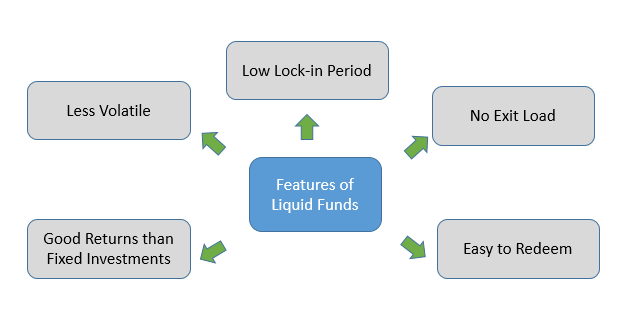
Features of Liquid Mutual Funds
1. Exit Load
Most liquid funds do not charge exit load. If applicable, it is usually minimal and limited to very early redemptions.
2. Volatility
Due to ultra-short maturity, liquid funds exhibit very low NAV volatility. However, like all market-linked products, they are not entirely risk-free.
3. Lock-in Period
Liquid funds do not have a lock-in period. You can redeem your investment at any time based on liquidity needs.
4. Returns
Liquid fund returns are influenced by:
- Prevailing short-term interest rates
- Money market liquidity
- Credit quality of instruments
Returns may fluctuate over time but generally remain more stable compared to longer-duration debt funds
5. Liquid Funds Taxation
Liquid fund taxation depends on how you invest -
- Capital Gains: Taxed as per applicable income tax slab
- Dividends: Taxed in the hands of the investor
Tax treatment may differ based on individual circumstances. Investors should consider post-tax returns when comparing liquid funds with other short-term options.
Liquid Funds vs Other Short-Term Options
| Option | Liquidity | Risk | Return Potential |
|---|---|---|---|
| Savings Account | Instant | None | Low |
| Fixed Deposit | Locked | Low | Moderate |
| Overnight Fund | Very High | Very Low | Low–Moderate |
| Liquid Fund | High | Low | Moderate |
Liquid funds often strike a balance between liquidity and efficiency.
Common Misconceptions About Liquid Funds
- “Liquid funds are risky” – Risk is low, but not zero
- “Returns are guaranteed” – Returns are market-linked
- “Only big investors use them” – Suitable for retail investors too
Understanding the purpose of liquid funds helps avoid misuse.
How to Invest in Liquid Funds Online?
Open Free Investment Account for Lifetime at Fincash.com
Complete your Registration and KYC Process
Upload Documents (PAN, Aadhaar, etc.). And, You are Ready to Invest!
Due to the lack of awareness about liquid funds, people don’t invest in them and instead keep huge sums in a savings account. But, it’s never too late to begin something good. So, invest in Best Liquid Funds today!
Final Thoughts
Liquid mutual funds play a crucial role in a well-structured financial plan. They help ensure that surplus money is never idle, while still maintaining liquidity and safety.
Instead of letting short-term funds lose value in savings accounts, liquid funds offer a smarter alternative—provided investors understand their role and limitations.
All efforts have been made to ensure the information provided here is accurate. However, no guarantees are made regarding correctness of data. Please verify with scheme information document before making any investment.








AMFI Registration No. 112358 | CIN: U74999MH2016PTC282153
Shepard Technologies Pvt. Ltd. (with ARN code 112358) makes no warranties or representations, express or implied, on products offered through the platform. It accepts no liability for any damages or losses, however caused, in connection with the use of, or on the reliance of its product or related services. Terms and conditions of the website are applicable.
©2026 Shepard Technologies Private Limited. All Rights Reserved
Good knowledgeable information, you should have to give an example